
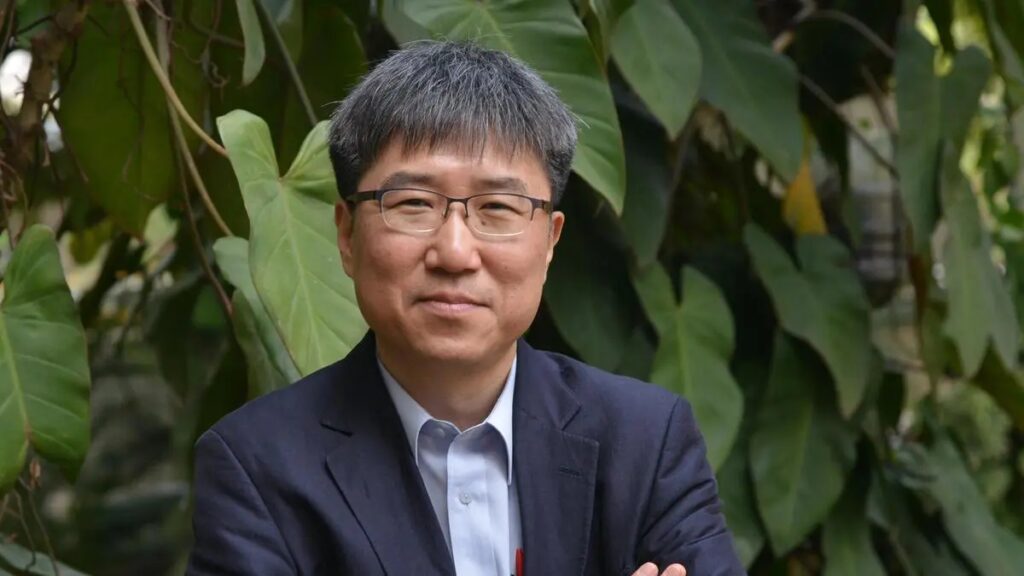
The economist says the country skipped the hard work of building factories and skills, leaving the economy exposed as automation accelerates.
이 경제학자는 이 나라가 공장 건설과 기술 역량 구축이라는 힘든 일을 건너뛰었기 때문에 자동화가 가속화되면서 경제가 취약해졌다고 말한다.
Economist Ha-Joon Chang warns that India has never properly matured its infant industries—protection froze producers instead of making them globally competitive. Here, Ha-Joon Chang during a talk at the TERI complex, in Bengaluru, on January 8, 2015. | Photo Credit: K. Bhagya Prakash
경제학자 장하준은 인도가 유치 산업을 제대로 성장시키지 못했다고 경고한다. 보호 정책은 생산자들을 세계적 경쟁력을 갖추게 하기보다 오히려 동결시켰다. 사진은 2015년 1월 8일 벵갈루루 TERI 단지에서 강연 중인 장하준. | 사진 제공: K. 바기야 프라카시
On April 2, when US president Donald Trump announced the “Liberation Day” tariffs, he upended a decades-old global economic order. To reignite manufacturing in the US and reduce trade deficits, Trump imposed a 10 per cent baseline tariff on all imports plus country-specific tariffs. India faced a 27 per cent tariff rate, which was increased to 50 per cent in August after Trump accused India of buying Russian crude oil and thereby funding the Russia-Ukraine war.
2025년 4월 2일, 미국 도널드 트럼프 대통령은 백악관 로즈 가든에서 “해방의 날” 관세를 발표하여 수십 년 동안 지속된 글로벌 경제 질서를 뒤흔들었다. 트럼프는 “이 날은 영원히 미국 산업이 재탄생한 날로 기억될 것”이라고 말했다. 미국의 제조업을 부활시키고 무역 적자를 줄이기 위해 트럼프는 모든 수입품에 대해 10퍼센트의 기본 관세를 부과했으며, 추가로 국가별 관세도 매겼다. 인도는 27퍼센트의 관세율에 직면했으며, 8월에는 인도가 러시아산 원유를 구매하여 러시아-우크라이나 전쟁에 자금을 지원하고 있다는 이유로 50퍼센트로 인상되었다.
Union Commerce Minister Piyush Goyal has assured businesses and exporters of an imminent trade deal with the US that will bring down tariffs, but Ha-Joon Chang, one of the world’s leading economists, says that is just not enough.
인도의 피유시 고옐 상무장관이 기업과 수출업자들에게 미국과의 무역 협정이 임박했으며 관세율이 인하될 것이라고 확신을 주고 있는 가운데, 세계 주요 경제학자 중 한 명인 장하준은 이것만으로는 충분하지 않다고 말한다.
In an exclusive interview with Frontline, Chang, who teaches economics at School of Oriental and African Studies (SOAS) in London and has authored more than a dozen books on global development and industrial policy, talks of India’s long-term economic development, its failure to industrialise, and how it can still do so in the face of automation, rising protectionism, and the threat of AI.
프론트라인과의 독점 인터뷰에서, 글로벌 개발과 산업 정책에 관한 12권 이상의 저서를 저술했으며 런던의 동양아프리카학교(SOAS)에서 경제학을 가르치고 있는 장하준은 인도의 장기 경제 발전, 산업화 실패, 그리고 자동화, 증가하는 보호주의, AI의 위협 속에서 인도가 여전히 산업화를 할 수 있는 방법에 대해 얘기한다.
Earlier this year, responding to Trump’s “Liberation Day” tariffs, you told Jacobin magazine that “there should be no return to free trade”. For economists, policymakers, and a generation that came of age in India and Asia over the last three decades, free trade and globalisation drove growth. Why shouldn’t the world return to it?
인터뷰어: 올해 초 트럼프의 “해방의 날” 관세에 대응하여 당신은 자코뱅 매거진에 “자유무역으로 돌아가서는 안 된다”고 말씀하셨습니다. 경제학자, 정책입안자, 그리고 지난 30년간 인도와 아시아에서 성장한 세대에게는 자유무역과 세계화가 경제 성장을 주도했습니다. 그렇다면 세계가 왜 자유무역으로 돌아가면 안 될까요?
In all of this, there are terminological confusions, if I may put it like that. Engaging in international trade, being able to export to global markets, is essential for economic development. Because as a developing country, you need to import advanced technologies whether it is in the form of machines, or intermediate inputs, or technology licensing, and you have to pay for them with foreign exchanges. You need to earn hard currency. Without international trade, there will be no economic development.
장하준: 이 모든 것에는 용어적 혼동이 있다고 할 수 있습니다. 국제 무역에 종사하고 글로벌 시장으로 수출할 수 있는 능력은 경제 발전에 필수적입니다. 왜냐하면 개발도상국으로서 당신은 기계 형태든, 중간 투입 형태든, 기술 라이선싱 형태든 고급 기술을 수입해야 하고 외환으로 그 비용을 지불해야 하기 때문입니다. 당신은 경화를 벌어야 합니다. 국제 무역 없이는 경제 발전이 불가능합니다.
But that is not the same as free trade. Even if there is some degree of trade barrier, you can still export. For example, international trade as a proportion of GDP grew much faster in the 1970s than in the 1980s—[a time] when there was a lot of trade liberalisation—because trade barriers are only one of many things that determine the level of trade.
하지만 이것은 자유무역과 같은 것이 아닙니다. 어느 정도의 무역 장벽이 있더라도 여전히 수출할 수 있습니다. 예를 들어, GDP에 대한 국제 무역의 비중은 많은 무역 자유화가 있었던 시기였던 1980년대보다 1970년대에 훨씬 더 빠르게 성장했습니다. 무역 장벽이 무역 수준을 결정하는 유일한 요인이 아니기 때문입니다.
But more importantly, developing countries cannot develop with free trade. I mean this with historical records, from a theoretical perspective. South Korea was a very poor country until the early 60s. In 1961, India’s per capita income was $88 and South Korea’s was $94. Essentially, the same level of development. But South Korea wanted to be a serious player in all sorts of high-tech industries: automobile, shipping, electronics. Of course, when they started these industries, they had to protect them very, very heavily. Otherwise, they would have been wiped out.
하지만 더욱 중요한 것은 개발도상국은 자유무역으로는 발전할 수 없다는 것입니다. 즉, 이것은 제가 여러 방식으로 말해 온 것입니다. 역사적 기록, 이론적 관점에서 말입니다. 남한은 1960년대 초반까지 매우 가난한 나라였습니다. 1961년에 인도의 1인당 소득은 88달러였고 남한의 소득은 94달러였습니다. 본질적으로 같은 수준의 개발 단계였습니다. 그런데 남한은 자동차, 해운, 전자제품과 같은 모든 종류의 첨단 산업 분야에서 진정한 플레이어가 되기를 원했습니다. 물론 그들이 이러한 산업을 시작했을 때, 그들은 매우 강하게 그 산업들을 보호해야 했습니다. 그렇지 않으면 순식간에 무너져 버렸을 것입니다.
For example, when South Korea started producing self-designed cars, the biggest company producing them was Hyundai. In 1976, Hyundai produced 10,000 cars. That year, Ford produced 1.9 million cars. General Motors was approaching 4.8 million cars. Now if South Korea had free trade in cars back then, Hyundai would have disappeared overnight. So until 1988, the South Korean government not only put up high tariffs, they banned the import of all foreign cars. And until 1998, they banned the import of Japanese cars. And they gave a huge amount of direct and indirect subsidies. This is what is called infant industry protection. They developed automobile, electronics, shipbuilding, all these industries through similar measures.
예를 들어, 남한이 자체 설계 자동차를 생산하기 시작했을 때, 그것을 생산하는 가장 큰 회사는 현대였습니다. 현대는 오늘날 인도에도 상당한 입지를 가지고 있습니다. 1976년에 현대는 1만 대의 자동차를 생산했습니다. 그 해 포드는 190만 대를 생산했습니다. 제너럴 모터스는 480만 대에 근접했습니다. 남한이 당시 자동차 부문에서 자유무역을 했다면, 현대는 하루밤 사이에 사라져 버렸을 것입니다. 따라서 1988년까지 남한 정부는 높은 관세를 부과했을 뿐만 아니라 모든 외국 자동차의 수입을 금지했습니다. 그리고 1998년까지 일본 자동차의 수입을 금지했습니다. 그리고 나서 엄청난 규모의 직접 및 간접 보조금을 제공했습니다. 이것을 유치산업 보호라고 부릅니다. 그들은 유사한 조치를 통해 자동차, 전자제품, 조선 등 모든 이러한 산업을 개발했습니다.
Before economic liberalisation in 1991, India, too, exercised strong protectionist measures. What went wrong with that approach?
인터뷰어: 1991년의 경제 자유화 이전에 인도도 강력한 보호주의 조치를 시행했습니다. 그 접근 방식에 무엇이 잘못되었을까요?
In India, until the 1980s, protection was used to preserve existing producers rather than giving them the space to accumulate production capabilities and go out in the bigger world to compete. Look at the Indian car industry. Earlier, the Indian government believed that trying to produce things like nice cars was to give in to Western consumerism. They kept producing the same Austin Ambassador. In the 1950s, this was okay because everyone had cars like that. But by the 1980s, it became a joke. And then they had to bring in Suzuki and all these Japanese producers to give better cars. That kind of protectionism doesn’t work. Protection only works when you use it to develop your own infant industries, so that they can export to the global market.
장하준: 인도에서는 1980년대까지 보호주의가 기존 생산자들을 유지하기 위해 사용되었습니다. 그들이 생산 능력을 축적하고 더 큰 세계로 나가 큰 기업들과 싸울 수 있는 공간을 주지 않았습니다. 인도의 자동차 산업을 보세요. 이전에 인도 정부는 좋은 자동차를 생산하려는 것이 서양 소비주의에 빠지는 것이라고 생각했습니다. 그들은 계속해서 같은 오스틴 앰배서더 자동차를 생산했습니다. 1950년대에는 모두가 그런 자동차를 가졌기 때문에 괜찮았습니다. 하지만 1980년대가 되면 그것은 웃음거리가 되었습니다. 그리고 나서 그들은 나라에 더 좋은 자동차를 제공하기 위해 스즈키와 모든 이러한 일본 제조사들을 데려와야 했습니다. 그러한 종류의 보호주의는 작동하지 않습니다. 보호주의는 유치 산업들을 발전시키기 위해 사용할 때만 작동하며, 이는 그것들이 글로벌 시장으로 수출할 수 있게 해줍니다.
When I say “developing countries need infant industrial protection,” people say, “But how about India in the 1960s and 1970s?” That is not what infant industry protection is, because India’s earlier economic strategy froze the industry in the infant stage. There was no ambition to make that infant grow up, go out in the bigger world, and fight the big boys, which is what South Korea has done with companies like Hyundai. The whole point is that you need a mixture of protectionism and active international trade in order to propel your economy forward.
제가 “개발도상국은 유치 산업 보호가 필요하다”고 말하면 사람들은 “1960~70년대 인도는 어땠나”라고 반문합니다. 당시에 인도 정부가 한 것은 유치 산업 보호가 아니었습니다. 인도의 초기 경제 전략은 유치 산업을 태동 단계에 고착시켰기 때문입니다. 그 유치 산업을 성장시켜 더 큰 세계로 나가 대기업들과 경쟁하게 하려는 야망이 없었습니다. 현대 같은 기업을 통해 한국이 해낸 바로 그 일입니다. 핵심은 경제를 발전시키기 위해서는 보호주의와 적극적인 국제 무역을 병행해야 한다는 점입니다.
After the infant industry protection phase, a particular industry or economy goes through a virtuous cycle of manufacturing. That did not happen in India.
인터뷰어: 유치 산업 보호 단계 후에, 특정 산업이나 경제는 제조업의 선순환을 거칩니다. 인도에서는 그런 일이 벌어지지 않았습니다.
Exactly. A lot of developing countries have experienced what is called premature deindustrialisation. But I would say that India hasn’t even experienced industrialisation in the first place. In the early 1960s, the manufacturing sector’s share of gross domestic product (GDP) in India was 14 per cent, and then it went up to 18 per cent [in the 2000s], and today it is 12 to 13 per cent.
장하준: 정확한 지적입니다. 많은 개발도상국이 조기 탈산업화라 불리는 것을 경험했습니다. 하지만 저는 인도는 애초에 산업화를 경험하지조차 못했다고 말할 것입니다. 1960년대 초반 인도에서 제조업 부문이 국내총생산(GDP)에서 차지하는 비율은 14퍼센트였고, 그다음에는 2000년대에 18퍼센트로 올라갔으며, 오늘날 그것은 12~13퍼센트입니다.
Consider Brazil. It had, by the mid 1980s, a manufacturing sector that accounted for about 35 per cent of GDP. Now, it is about 10 per cent. That is what premature deindustrialisation looks like.
브라질을 생각해 보세요. 1980년대 중반에는 제조업 부문이 GDP의 약 35퍼센트를 차지했습니다. 현재는 약 10퍼센트입니다. 이것이 조기 탈산업화가 어떻게 보이는지 보여줍니다.
But India, very worryingly, has not been able to maintain even the relatively low level of industrial development that it had achieved by the 2000s.
하지만 인도는 매우 우려스럽게도 2000년대까지 달성했던 상대적으로 낮은 수준의 산업 발전도 유지할 수 없었습니다.
India still has ambitions of becoming a global manufacturing hub. Governments have tried to push it for two decades—Prime Minister Narendra Modi launched “Make in India” in 2014. Yet India has failed. It missed both waves of manufacturing diversification out of China; those investments went to South East Asia instead. Why does India repeatedly fail to industrialise?
인터뷰어: 인도는 여전히 글로벌 제조업 허브가 되려는 야심을 가지고 있습니다. 정부는 지난 20년간 그것을 추진하려고 노력했습니다. 나렌드라 모디 총리는 2014년에 “인도에서 만들기”를 출범시켰습니다. 그런데도 인도는 실패했습니다. 인도는 중국의 외부로의 제조업 다각화 물결 둘 모두 놓쳤습니다. 그 투자들은 대신 동남아시아로 흘러갔습니다. 인도가 반복적으로 산업화에 실패하는 이유는 무엇일까요?
I think, ultimately, that has to do with the political economy. Your business elites do not want serious industrialisation. The business elites are either in the financial sector or, even if they are in the industrial sector, they still have very strong links with financial capital which doesn’t like industrialisation because, for them, the most important thing is the rate of return.
장하준: 저는 궁극적으로 그것이 정치 경제와 관련이 있다고 생각합니다. 인도의 기업 엘리트들은 진정한 산업화를 원하지 않습니다. 인도의 기업 엘리트들은 금융 부문에 있거나, 산업 부문에 있더라도 수익률을 가장 중요시하기 때문에 산업화를 싫어하는 금융 자본과 매우 강한 연계를 가지고 있습니다.
In the short run, if you want to develop a serious industrial base, you need to go through a period when finance is repressed. Because if shareholders keep asking for money [in the form of return on investment], companies would not have the money to invest.
단기적으로 진정한 산업 기반을 개발하려면 금융이 억압받는 시기를 거쳐야 합니다. 왜냐하면 주주들이 계속해서 돈을 요구한다면, 기업은 투자할 돈이 없을 것이기 때문입니다.
Arguably one of the most famous Indian companies—though I do not know whether it is still legally Indian—is steel manufacturer ArcelorMittal. But Lakshmi Mittal built the company through clever mergers and acquisitions rather than by coming up with innovative technologies. Your elites do not want to wait for 10 or 15 years and sacrifice short-term financial returns to build productive capabilities.
아마도 가장 유명한 인도 기업 중 하나인데, 여전히 법적으로 인도 기업인지는 모르겠습니다만, 아르셀로미탈은 철강 제조업체입니다. 하지만 락슈미 미탈은 혁신적인 기술을 개발하기보다는 영리한 인수합병을 통해 그 회사를 구축했습니다. 인도의 엘리트들은 10년이나 15년을 기다리지 않으려 하며, 생산 능력을 구축하기 위해 단기 금융 수익을 희생하고 싶어 하지 않습니다.
You need to invest in worker skills, infrastructure, and research and development (R&D). I looked up the latest data on R&D in India, and as a proportion of GDP, it is barely 0.6 per cent, compared with the OECD (Organisation for Economic Co-operation and Development) average of 3 per cent, and South Korea’s 5.2 per cent.
직원 기술, 인프라, 연구개발(R&D)에 투자해야 합니다. 인도의 최신 R&D 데이터를 살펴봤는데, GDP에 대한 비율로는 겨우 0.6퍼센트입니다. 이는 경제협력개발기구(OECD) 평균 3퍼센트, 남한의 5.2퍼센트와 비교됩니다.
I am afraid there is no serious attempt to develop manufacturing in India. Yes, earlier India built manufacturing industries, but there was no ambition to join the global economy. And later, [the government and companies] did say that they want to develop manufacturing, but they did not do anything serious because they did not want to forego their short-term interests in order to have a more dynamic, industrially driven economy.
저는 인도에는 제조업을 발전시키려는 진지한 시도가 없다고 말씀드립니다. 예, 이전에 인도는 제조 산업을 구축했지만, 글로벌 경제에 참여하려는 야망이 없었습니다. 그리고 나중에는 정부와 기업이 제조업을 발전시키고 싶다고 말했지만, 단기적 이익을 포기하기 원하지 않았기 때문에 더 역동적이고 산업-주도적인 경제를 가지기 위해 아무것도 진지하게 하지 않았습니다.
Extreme financialisation and shareholder capitalism divert capital from productive capacity. After the pandemic, India witnessed a financial boom that appears increasingly detached from the real economy. Your research identifies investment’s share of GDP as primary to sustained industrialisation. China’s stands above 40 per cent, South Korea is at 33 per cent, while India—at a lower development stage—barely reaches 30 per cent. How do you assess this?
인터뷰어: 과도한 금융화와 주주 자본주의는 자본을 생산 능력을 확충하는 데 쓰지 못하게 합니다. 팬데믹 이후 인도는 실물 경제와 점점 더 멀어지는 것으로 보이는 금융 호황을 목격했습니다. 당신의 연구는 GDP 대비 투자 비율을 지속적인 산업화의 핵심으로 식별합니다. 중국의 비율은 40퍼센트 이상, 남한의 비율은 33퍼센트, 반면 인도는 더 낮은 개발 단계에도 불구하고 겨우 30퍼센트입니다. 이것을 어떻게 평가하십니까?
There is no secret for economic success. The most important indicator is whether you are investing. On that account, India has not done too badly.
장하준: 경제적 성공에 비결은 없습니다. 가장 중요한 지표는 투자하고 있는지 여부입니다. 그 측면에서 인도는 별로 나쁘지 않았습니다.
But, more importantly, it matters whether you are investing in the right areas. You need to invest in areas such as infrastructure, education, skills, machinery, and technology licensing. Without these investments, there is no magic economic growth. India is a relatively poor country with less than $3,000 per capita income, but it is still big enough with enough capital to nurture some serious industries in a few sectors. It has these highly trained engineers and scientists. But why is this not happening? Because there is no serious attempt on the part of the government.
하지만 더욱 중요한 것은 올바른 영역에 투자하고 있는지 여부입니다. 인프라, 교육, 기술, 기계, 기술 라이선싱과 같은 영역에 투자해야 합니다. 이러한 투자 없이는 마법의 경제 성장이 없습니다. 인도는 1인당 소득이 3,000달러 미만인 상대적으로 가난한 나라이지만, 여전히 몇몇 부문에서 진정한 산업을 육성할 수 있을 만큼 충분히 크고 자본이 충분합니다. 인도는 고도로 훈련된 엔지니어와 과학자들을 보유하고 있습니다. 그런데 왜 이것이 일어나지 않고 있을까요? 정부 측의 진지한 시도가 없기 때문입니다.
In your work you have said that the state should take a bigger role in allocating capital during the various stages of development. How can government redirect capital allocation from financial markets to productive capacity without triggering market panic?
인터뷰어: 당신의 저작에서 당신은 국가가 개발의 여러 단계 동안 자본 배분에서 더 큰 역할을 해야 한다고 말했습니다. 어떻게 정부가 자본 배분을 금융 시장으로부터 생산 능력으로 리디렉션할 수 있으면서도 시장 패닉을 유발하지 않을 수 있을까요?
When you have high degree of financialisation, things become very difficult because the financial market seeks short-term gains and will react negatively to anything that will reduce this. You counteract this through a combination of reining in some of these powers of the financial industry, and also through a strategy of convincing communication.
장하준: 높은 수준의 금융화가 있으면 상황이 매우 어려워집니다. 왜냐하면 금융 시장은 단기 이득을 추구하며 그것을 감소시킬 어떤것에도 부정적으로 반응하기 때문입니다. 금융 산업의 일부 권력을 억제하고 설득의 커뮤니케이션 전략도 사용하여 이것에 대응해야 합니다.
You have to convince people that restraints on the financial sector will create some reduction in financial profits in the short-to-medium run, but will start a trend where companies invest in machinery and R&D. When the government sends people out to study engineering, it must make sure that they come back rather than go work in consulting companies and investment banks in the US or UK.
금융 부문에 대한 제약이 단기~중기적으로 금융 수익의 약간의 감소를 초래할 것이지만, 기업이 기계와 R&D에 투자하는 추세를 시작할 것이라는 것을 사람들에게 확신시켜야 합니다. 정부가 엔지니어링을 공부할 사람들을 보낼 때, 그들이 미국이나 영국의 컨설팅 회사와 투자 은행에 일하러 가지 않고 돌아올 것을 확실히 해야 합니다.
You have to do things to show that maybe it is worth the wait. Some of the people in the financial industry are completely short-sighted. But, even in the financial industry, many people realise that it is [financially] better to have a smaller portion of a much larger economy, than a huge portion of a small economy. If a large proportion of people in the financial sector are convinced that the way India is reforming its economic strategy will improve long-term growth, they will think that the new strategy is better for them too.
기다릴 가치가 있을 수도 있다는 것을 보여주기 위해 일들을 해야 합니다. 금융 산업의 일부 사람들은 완전히 근시안적입니다. 하지만 금융 산업 내에서도 많은 사람들이 거대한 경제의 작은 부분을 가지는 것이 작은 경제의 거대한 부분을 갖는 것보다 금전적으로 더 낫다는 것을 깨닫습니다. 금융 부문의 많은 인구가 인도가 경제 전략을 개혁하는 방식이 장기적 성장을 개선할 것이라고 확신한다면, 그들은 새로운 전략도 자신들에게 더 좋다고 생각할 것입니다.
Private sector investment has lagged in India. Finance Minister Nirmala Sitharaman has repeatedly urged companies to invest. Earlier this year, she said “healthy corporate balance sheets are sitting on passive investible funds, instead of companies engaging in capacity expansion”.
인터뷰어: 인도에서는 민간 부문 투자가 부진합니다. 니르말라 시타라만 재무장관은 기업들에게 투자를 반복적으로 촉구했습니다. 올해 초 그녀는 “기업들의 재무 상태가 매우 건전해서 자금이 많이 쌓여 있는데도 생산 능력 확충에 쓰지 않고 그냥 놀리고 있다”고 말했습니다.
That is the key. The private sector has to invest. There is only so much the government can do. The government needs to find ways to make the private sector invest in the right industries —whether through the financial leverage it has through public sector banks, or by developing a convincing narrative that encourages people to invest, or by creating a social pact between businesses and government. Every country has to find its own formula here, but there are no two ways about the fact that you have to invest in the right areas.
장하준: 그것이 핵심입니다. 민간 부문이 투자해야 합니다. 정부가 할 수 있는 일은 한정되어 있습니다. 정부는 민간 부문이 딱 맞는 산업들에 투자하도록 하는 방법을 찾아야 합니다. 공공 부문 은행을 통한 금융 레버리지든, 사람들이 투자하도록 권장하는 설득력 있는 이야기의 개발이든, 또는 기업과 정부 사이의 사회적 협약이든 말입니다. 모든 나라가 여기서 자신의 공식을 찾아야 하지만, 딱 맞는 영역에 투자해야 한다는 사실에 대해서는 의심의 여지가 없습니다.
Trump’s “Liberation Day” tariffs shocked Indian policymakers harbouring industrialisation dreams. India initially hoped to leverage tariff arbitrage, but sentiments soured quickly. How do governments navigate this trade uncertainty?
인터뷰어: 트럼프의 “해방의 날” 관세는 산업화 꿈을 품은 인도 정책입안자들을 충격에 빠뜨렸습니다. 인도는 초기에 관세 차익을 활용하기를 희망했지만 감정이 빠르게 악화되었습니다. 각국 정부는 이러한 무역 불확실성을 어떻게 헤쳐 나가야 할까요?
What Trump is doing is not going to last forever. In the US, the ultimate authority with tariffs lies with the Congress. Trump used the International Economic Emergency Powers Act, which allows him to do certain things without Congress approval, to bypass that. But people have challenged this and the case is now in the Supreme Court. It is possible that this will get struck down in the next few months, and then things can change drastically.
장하준: 트럼프가 하고 있는 것은 영원히 지속되지 않을 것입니다. 미국에서 관세에 대한 궁극의 권한은 의회에 있습니다. 트럼프는 국제 경제 긴급 권한법을 사용했으며, 이것은 의회의 승인 없이 특정한 것들을 할 수 있게 해줍니다. 그러나 사람들이 이것에 이의를 제기했고 그 사건은 현재 대법원에 있습니다. 앞으로 몇 개월 내에 이것이 기각될 가능성이 있으며, 그러면 상황이 크게 변할 수 있습니다.
Even if that does not happen, there is a mid-term election next year and inflationary pressure is building up in the US economy. Trump has been very stupid in this respect because, if he wanted to beat China, he should have allied with India, or South Korea, or Japan, and said, “I’m not going to impose any tariff on you, but I will impose 100 per cent tariff on China.” Then, these other countries could have replaced China. Instead, he put tariffs on everyone and antagonised everyone and now there is rising inflation in the US.
비록 그렇지 않더라도, 내년 중기 선거가 있고 미국 경제에 인플레이션 압력이 쌓이고 있습니다. 트럼프는 이 측면에서 매우 어리석었습니다. 그가 중국을 이기고 싶었다면, 그는 인도나 남한이나 일본과 동맹을 맺었어야 하고, “나는 당신에게 관세를 부과하지 않을 것이지만 중국에는 100퍼센트 관세를 부과할 것이다”고 말했어야 했습니다. 그러면 이 다른 나라들이 중국을 대체할 수 있었을 것입니다. 대신 그는 모든 나라에게 관세를 부과했고 모든 나라를 적으로 만들었으며 이제 미국에는 인플레이션이 증가하고 있습니다.
One possible scenario is that inflation accelerates rapidly and by summer [of 2026], the Republicans get desperate and put pressure on Trump to ease protectionism. Even if that does not happen, Donald Trump is not a king. We should not behave as if this will last forever. So okay, there is 50 per cent [tariff] on India this year. But it is very likely that it may not remain 50 per cent next year, and it definitely will not be 50 per cent four years later.
한 가지 가능한 시나리오는 인플레이션이 빠르게 가속되고 2026년 여름까지 공화당이 절망적이 되어 트럼프에게 보호주의를 완화하라는 압력을 가한다는 것입니다. 비록 그렇지 않더라도 도널드 트럼프는 왕이 아닙니다. 우리는 이것이 영원히 지속될 것처럼 행동해서는 안 됩니다. 그러니 좋습니다, 올해 인도는 50퍼센트 관세입니다. 하지만 내년에는 50퍼센트를 유지하지 않을 가능성이 매우 높으며, 4년 후에는 분명히 50퍼센트가 아닐 것입니다.
Can India really industrialise? Despite 6-7 per cent GDP growth—among the fastest globally—this looks like underperformance given the country’s large, young workforce, and persistent unemployment. After decades of failed attempts to sustain manufacturing, and now facing disruptions from artificial intelligence, automation, and Trump’s tariffs, can India still pursue industrialisation as its path to prosperity?
인터뷰어: 인도가 정말 산업화할 수 있을까요? 세계에서 가장 빠른 성장률 중 하나인 6~7퍼센트의 GDP 성장에도 불구하고, 인도의 많은 젊은 노동 인구와 지속적인 실업을 고려하면 이것은 성과 부진으로 보입니다. 수십 년 동안 제조업을 유지하려는 실패한 시도 후, 이제 AI, 자동화, 트럼프의 관세로 인한 혼란에 직면하여, 인도는 여전히 산업화를 번영으로 가는 경로로 추구할 수 있을까요?
Emphatically, yes. No country has obtained a high standard of living without a serious degree of industrialisation. There are exceptions like Qatar, but even countries like Switzerland and Singapore—which are often touted as examples of service-based prosperity—are some of the most industrialised countries in the world if one looks at the manufacturing output per capita.
장하준: 절대로 그렇습니다. 어떤 나라도 진정한 수준의 산업화 없이 높은 생활 수준을 얻지 못했습니다. 카타르 같은 예외가 있지만, 스위스나 싱가포르 같은 나라들도, 일반적으로 서비스 기반의 번영의 예로 자주 칭해지지만, 제조 산출을 보면 가장 산업화된 나라들에 속합니다.
Switzerland has the highest manufacturing value add per capita in the world; Singapore is somewhere between No. 2 and No. 4, depending on the year. They have strong service sectors because they have a prosperous manufacturing industry. All these high-value services mainly sell to manufacturing companies—engineering, research, design consultancy, finance, and so on.
스위스는 세계에서 1인당 제조 부가가치가 가장 높습니다. 싱가포르는 연도에 따라 2위에서 4위 사이입니다. 그들은 번영한 제조 산업이 있기 때문에 강한 서비스 부문을 가지고 있습니다. 이 모든 고 가치 서비스는 주로 제조 회사들에 판매됩니다. 엔지니어링, 연구, 설계 컨설팅, 금융 등 말입니다.
Secondly, India has been touted as a success story of services-based development. But this strategy, when compared to what China has achieved in the last 25 years, pales into insignificance. India has done quite well in some export-oriented service sectors, but they have largely been in relatively low value-add sectors, for example in back offices, call centres, and low-level software coding. India has not been able to upgrade within those sectors. Where is your American Express? Where is your McKinsey?
둘째, 인도는 서비스 기반 발전의 성공 사례로 칭해지고 있습니다. 하지만 이 전략은 지난 25년간 중국이 달성한 것과 비교할 때 보잘것이 없습니다. 인도는 일부 수출 지향적 서비스 부문에서 상당히 잘했습니다. 하지만 그들은 주로 상대적으로 저부가가치 부문에 있습니다. 예를 들어, 백오피스, 콜센터, 저급 소프트웨어 코딩에서 말입니다. 인도는 그 부문 내에서 업그레이드할 수 없었습니다. 인도의 아메리칸 익스프레스는 어디 있을까요? 인도의 맥킨지는 어디 있을까요?
I am not one of those people who think that AI will completely change the world in the next five years; I am actually very sceptical about it. But one set of activities that is going to be hit hard by AI is exactly the service industries that India has been specialising in. For example, AI can do basic software coding. India will be one of the biggest casualties of AI. It needs to get out of there, it needs to industrialise.
저는 AI가 앞으로 5년 안에 세상을 완전히 변신시킬 것이라고 생각하는 사람이 아닙니다. 저는 실제로 그것에 대해 매우 회의적입니다. 하지만 AI에 의해 매우 심하게 타격받을 활동 집합이 하나 있는데, 정확히 인도가 특화된 서비스 산업입니다. 예를 들어, AI는 기본적인 소프트웨어 코딩을 할 수 있습니다. 인도는 AI의 가장 큰 피해자가 될 것입니다. 그것에서 나와야 합니다, 산업화해야 합니다.
Raghuram Rajan, the former Governor of the RBI, has said—I believe on more than one occasion—that India has missed the manufacturing bus and it cannot follow in the footsteps of Asian industrialisers, especially China, because of a rising trend in factory automation that will eventually nullify its low-cost advantage. He says that India should prioritise services as its primary growth model. Is he correct?
인터뷰어: 인도 중앙은행 전 총재인 라구람 라잔은 여러 차례에 걸쳐 인도는 제조업 발전의 기회를 놓쳤으며, 공장 자동화 추세가 가속화되면서 결국 저비용 경쟁력이 사라질 것이기 때문에 아시아 산업화 국가들, 특히 중국의 뒤를 따를 수 없다고 주장해 왔습니다. 그는 인도가 서비스업을 주요 성장 모델로 삼아야 한다고 말합니다. 그의 주장은 맞을까요?
I have not read anything by Raghuram Rajan on this particular topic, but I think that he is seriously mistaken. If he is worried about the impact of automation—of which AI is one form—he should be very worried about India’s service-based strategy. Those are exactly the kind of services that will be hit first when AI becomes widely available. More importantly, there is no evidence that, at a global scale, manufacturing is becoming any less important. In the last 50 years, the share of manufacturing in global output and global employment has been more or less the same. We have just seen the redistribution of manufacturing from richer countries to China and other Asian countries. It is not as if manufacturing is disappearing.
장하준: 저는 이 특정한 주제에 대해 라그후람 라잔이 쓴 것을 읽지 못했지만, 저는 그가 심각하게 틀렸다고 생각합니다. 그가 AI가 한 형태인 자동화의 영향을 걱정한다면, 그는 인도의 서비스 기반 전략에 대해 매우 걱정해야 합니다. 그것들은 정확히 AI가 광범위하게 이용 가능해질 때 가장 먼저 타격받을 서비스들입니다. 더욱 중요한 것은 글로벌 규모에서 제조가 덜 중요해지고 있다는 증거가 없다는 것입니다. 지난 50년 동안 글로벌 산출과 글로벌 고용에서 제조의 비중은 본질적으로 같았습니다. 우리는 부자 나라에서 중국과 다른 아시아 나라로의 제조의 재배치를 봤을 뿐입니다. 제조가 사라지는 것이 아닙니다.
Manufacturing is also the sector where technological progress happens, because that is where you do most R&D. Even in countries like the US and the UK, which now have tiny manufacturing sectors accounting for 9-10 per cent of GDP, 60 to 70 per cent of R&D is done in the manufacturing sector. In countries like South Korea and Germany, which are manufacturing nations, 80 to 90 per cent of R&D is done by the manufacturing sector. If you take out this sector, your rate of technological progress will dramatically slow down.
제조는 또한 기술적 진보가 일어나는 부문입니다. 왜냐하면 그것이 대부분의 R&D를 하는 곳이기 때문입니다. 제조 부문이 9~10퍼센트의 GDP를 차지하는 미국과 영국 같은 나라들에서도 R&D의 60~70퍼센트는 제조 부문에서 수행됩니다. 남한과 독일 같이 제조 국가인 나라에서는 R&D의 80~90퍼센트가 제조 부문에 의해 수행됩니다. 이 부문을 없앤다면, 기술적 진보율은 극적으로 느려질 것입니다.
I am actually upset with people like Rajan and, these days, Dani Rodrik, who mislead developing countries into believing that there is no future in manufacturing, and you can grow on the basis of services.
저는 사실 라잔 같은 사람들과 요즘의 다니 로드릭 같은 이들이 개발도상국들을 오도하여 제조업에는 미래가 없다고 믿게 하고, 서비스업 기반으로 성장할 수 있다고 주장하는 것에 분노합니다.
Faced today with factory automation, AI-led disruption, rising trade barriers, and protectionism among advanced Western economies, if India were to still aim to industrialise, what policy options does it have?
인터뷰어: 오늘날 공장 자동화, AI 주도적 파괴적 혁신, 고도화된 서구 경제권 내 무역 장벽 강화 및 보호주의 확산이라는 현실에 직면한 인도에게, 여전히 산업화를 추구한다면 어떤 정책적 선택지가 남아 있을까요?
India will have to rely on domestic demand to a significant extent. It is a large country. China is a large country too, and it has done a lot to increase its exports for the reasons that I mentioned earlier—you need to export to sustain the capacity to import more advanced technologies.
인도는 상당 부분 내수에 의존해야 할 것입니다. 인도는 거대한 나라입니다. 중국 역시 거대한 나라이며, 제가 앞서 언급한 이유들—더 진보된 기술을 수입할 역량을 유지하려면 수출이 필요하다—로 수출 증대에 많은 노력을 기울여 왔습니다.
But a huge country like India has to develop some basic manufacturing for the domestic market. This does not sound as glorious as reading MRI scans from American hospitals; but people need to be fed, they need to have appliances in their homes, all of these things.
하지만 인도처럼 거대한 나라는 내수 시장을 위해 몇몇 기초 제조업을 발전시켜야 합니다. 이것은 미국 병원에서 MRI 스캔 결과를 판독하는 것만큼 영예로워 보이진 않지만, 사람들은 먹고살아야 하며 그들은 가정에 가전제품들이, 그것들 모두가 필요합니다.
India must make more shoes, jeans, textiles, and consumer appliances for the domestic market?
인터뷰어: 인도는 내수 시장을 위해 더 많은 신발, 청바지, 직물, 소비자 가전제품을 만들어야 할까요?
Yes! What is the point of economic growth and development if you do not provide these basic things for your general public? India also has world-class capacities in some sectors such as pharmaceuticals. Why not leverage it to develop the industries of the future? You also need a huge amount of energy if you want to grow, so why not develop green energy industries? There are a lot of things that are not that difficult that you can do to industrialise.
장하준: 그렇습니다! 이 기본적인 것들을 일반 대중에게 제공하지 않는다면 경제 성장과 발전의 요점이 무엇일까요? 인도는 또한 제약 같은 일부 부문에서 세계 수준의 능력을 가지고 있습니다. 왜 그것을 미래 산업을 개발하기 위해 활용하지 않을까요? 또한 성장하려면 엄청난 양의 에너지가 필요하므로 왜 녹색 에너지 산업을 개발하지 않을까요? 산업화하기 위해 할 수 있는 어렵지 않은 많은 것들이 있습니다.
Until now, India’s response to Trump’s tariffs has been to diversify its lost American export market share, and accelerate signing bilateral free trade agreements with countries like the UK, Australia, Oman, New Zealand, among others. Is this enough?
인터뷰어: 지금까지 트럼프 관세에 대한 인도의 대응은 잃어버린 미국 수출 시장 점유율을 다각화하고 영국, 호주, 오만, 뉴질랜드 등의 나라들과의 양자 자유무역협정 체결을 가속화하는 것이었습니다. 그것이 충분할까요?
That is probably not a bad idea in the short term. But if you keep signing free trade agreements with more advanced countries, you will reduce your capacity to develop your own infant industries. For example, if you sign a free trade agreement with Australia, you cannot develop the mining equipment industry in which Australia is one of the top producers in the world. Indian companies will keep buying these machines from the Australians, and you cannot put up trade barriers against them.
장하준: 그것은 단기적으로는 나쁜 생각이 아닐 수도 있습니다. 하지만 더 많은 선진국들과 자유무역협정을 계속해서 체결한다면, 유치 산업을 발전시킬 능력은 줄어들 것입니다. 예를 들어, 호주와 자유무역협정을 체결한다면, 호주가 최고의 생산국 중 하나인 광산 장비 산업을 개발할 수 없습니다. 인도 기업들은 호주인들로부터 이 기계들을 계속 구매할 것이고, 인도 정부는 그 구매를 억제하기 위한 무역 장벽을 설치할 수 없습니다.
These free trade agreements may give you greater access to foreign markets, but do not forget that these agreements freeze your economy in time. It is a short-term palliative.
이 자유무역협정들은 외국 시장들에 더 접근할 수 있게 해줄 수도 있습니다만 경제를 시간 속에 동결시킨다는 것을 잊지 마세요. 그것은 단기적인 처방입니다.
One of Modi’s signature policies has been creating national champions such as the Adani Group. Comparisons have been drawn with South Korea’s chaebols—large family-owned conglomerates that drove economic growth. But given India’s political economy, does this risk entrenching crony capitalism that stagnates rather than accelerates growth?
인터뷰어: 모디의 대표적 정책 중 하나는 아다니 그룹 같은 국가 챔피언을 만드는 것이었습니다. 한국의 재벌—경제 성장을 주도한 대형 가족 소유 복합 기업—과 비교되기도 했습니다. 하지만 인도의 정치 경제를 고려할 때, 이것은 성장을 가속하기보다는 정체시키는 특권 자본주의를 심화시킬 위험이 있지 않을까요?
I think it is important to create and support these large companies that can—maybe not immediately, but ultimately—become global players. But when you try to create them, when you try to support them, you have to have conditions in place.
장하준: 저는 즉시는 아니지만 궁극적으로는 세계적 기업이 될 수 있는 이러한 대형 기업들을 만들고 지원하는 것이 중요하다고 생각합니다. 하지만 그것들을 만들려고 할 때, 그것들을 지원할 때, 적합한 조건들을 갖춰야 합니다.
If we are giving these companies all kinds of protection and subsidies using taxpayer money, they must deliver in terms of productivity, employment, and exports. This is what countries like Japan, South Korea, and Taiwan were very good at. For example, they would require that when foreigners invest in an industry, local players would have to form a joint venture so that those foreign companies can have the incentives and the compulsions to transfer technology, train workers, and so on. But in return, the joint venture needs to increase the localisation ratio from say 55 per cent to 85 per cent in 10 years.
우리가 납세자의 돈을 사용하여 이 기업들에게 모든 종류의 보호와 보조금을 주고 있다면, 그것들은 생산성, 고용, 수출 측면에서 성과를 내야 합니다. 이것이 일본, 남한, 대만 같은 나라들이 매우 잘했던 것입니다. 예를 들어, 외국 기업이 특정 산업에 투자할 경우 현지 기업에게 그 기업과 합작 투자를 하도록 요구해야 합니다. 외국 기업이 기술을 이전하고 노동자들을 훈련시키는 등에 대한 인센티브와 의무를 갖도록 말입니다. 그러나 그 대가로 합작 투자는 현지화 비율을 10년 내에 55%에서 85%로 높여야 합니다.
You need all kinds of conditions, and these conditions will differ across industries. As a government, you do not want to just give money away in the hope that, somehow, they will deliver. Some of them will, but others won’t. You have to make it clear that this is conditional support—if companies do not perform in, say, 10 years, you [the government] will pull the rug from under their feet.
여러 조건이 필요하며, 이러한 조건은 산업별로 다를 것입니다. 정부로서 단순히 돈을 지원하며 그것들이 어떻게든 성과를 낼 것이라는 희망만 품어서는 안 됩니다. 일부는 성과를 낼 수 있겠지만, 그렇지 못한 기업들도 있을 것입니다. 정부 측은 이것이 조건부 지원임을 분명히 해야 합니다—예를 들어 10년 내에 성과를 내지 못할 경우, 그 기업들의 발밑에서 받침대를 빼버릴 것임을 명시해야 합니다.
But wealth concentration appears severe for India’s development stage. A report commissioned by South Africa for its G20 presidency found that between 2000 and 2023, the wealth of India’s top 1 per cent surged 62 per cent, compared to 53 per cent for China.
인터뷰어: 하지만 인도는 발전 단계에 비해 부의 집중이 심각해 보입니다. 남아프리카공화국이 G20 의장국으로서 의뢰한 보고서에 따르면, 2000년부터 2023년까지 인도 상위 1%의 부는 62%로 급증한 반면, 중국은 53%에 그쳤습니다.
In the long run, you need to make people believe that the system is working for them. This is why we are seeing people like Trump get elected—they do not have any intention of helping ordinary people but they get power by saying that the system has failed and “I am here for you”. Unfortunately, once they get elected, they do things that hurt poorer people.
장하준: 장기적으로 보면, 사람들이 체제가 자신들을 위해 작동하고 있다고 믿게 만들어야 합니다. 트럼프 같은 인물들이 당선되는 이유가 바로 여기에 있습니다—그들은 평범한 사람들을 도울 의도가 전혀 없지만, 체제가 실패했다고 주장하며 “내가 여러분을 위해 여기 있다”고 말함으로써 권력을 얻습니다. 안타깝게도, 일단 당선되면 그들은 가난한 사람들을 해치는 일들을 저지릅니다.
So, this extensive concentration of wealth at the top in India is a huge problem. In a country where millions of people still live in abject poverty, you need a development strategy that delivers for these people. I understand that it is more limited than what the propaganda says, but Mr. Modi became popular by delivering some of these basic things such as toilets and water. Even if you belong to the elite, it is in your long-term self-interest to share some of your wealth with the poorer segments of the society. Because otherwise, they will destroy the system.
따라서, 인도 상위층에 부가 막대하게 집중되어 있는 것은 심각한 문제입니다. 수많은 사람들이 여전히 극심한 빈곤 속에 살아가는 나라에서는 이들을 위한 실질적 성과를 내는 발전 전략이 필요합니다. 현실이 선전되는 것보다 제한적이라는 점은 이해하지만, 모디 총리는 화장실과 상수도 같은 기본적인 것들을 제공함으로써 인기를 얻었습니다. 엘리트 계층에 속하더라도, 사회의 빈곤층과 부의 일부를 나누는 것은 장기적으로 본인의 이익에 부합합니다. 그렇지 않으면 그들이 체제를 파괴할 것이기 때문입니다.
Analysis of government data has found that even as India witnessed robust GDP growth rates in the last decade, growth in real rural wages have been stagnant. For a decade.
인터뷰어: 정부 데이터의 분석은 인도가 지난 십년간 견실한 GDP 성장률을 기록했음에도 불구하고 실질 농촌 임금은 정체 상태에 있었음을 보여줍니다. 십년 동안 말입니다.
Oh, wow.
장하준: 오, 와우.
In the economic history of nations, and how nations develop, have you found something like this? A few economists in India have called this “a very puzzling trend”.
인터뷰어: 국가들의 경제사 및 발전 양상에서 이와 같은 것을 발견한 적이 있습니까? 인도의 몇몇 경제학자들은 이를 “매우 불가해한 추세”라고 불렀습니다.
This is what people used to call enclave growth. The late American economist Lance Taylor wrote this paper in 1976 about Brazil called “The Economics of Belindia”. At that time, India was a very poor country. His argument was that Brazil is like Belgium superimposed on India: masses of poor people around little islands of rich people. India today is turning into [Taylor’s] Belindia. This kind of growth in the long run is not sustainable, both economically and politically.
장하준: 이것이 사람들이 전에는 엔클레이브 성장이라고 부르던 것입니다. 이제는 고인이 된 미국 경제학자 랜스 테일러는 1976년에 브라질에 관해 “벨린디아의 경제학”이라는 논문을 썼습니다. 당시 인도는 매우 가난한 나라였습니다. 그의 주장은 브라질이 인도 위에 겹쳐진 벨기에 같다는 것입니다. 부유한 사람들의 작은 섬들을 수많은 가난한 사람들이 둘러싸고 있다는 의미에서 말입니다. 인도는 오늘날 테일러의 벨린디아로 변하고 있습니다. 이러한 종류의 성장은 경제적으로나 정치적으로 장기적으로 지속될 수 없습니다.
Consider East Asian countries where, despite all kinds of bad things happening—military dictatorship, one party rule, repression of worker rights and everything—they sustained their growth trajectory because they shared that growth with the poorer people. All of them had land reforms and, even though they had very small welfare states, they had a lot of protection for the weak guys.
동아시아 나라들을 생각해 보세요. 군부 독재, 일당 지배, 노동자 권리의 억압 등 일어나는 모든 종류의 나쁜 일들에도 불구하고, 그 나라들은 그 성장을 더 가난한 사람들과 공유했기 때문에 자신들의 성장 궤적을 유지했습니다. 그 나라들 모두는 토지 개혁을 했고, 매우 작은 복지 국가를 가졌음에도 불구하고 약한 사람들을 위한 많은 보호가 있었습니다.
For example, South Korea, until the 1990s, had serious restrictions on large retail stores to protect small retail shops from being overwhelmed by larger competitors. It also preserved some industries for small and medium enterprises—tofu-making was one of those; large companies couldn’t make tofu. If you are a small company operating in those “protected” sectors, your standard of living may be low, but it keeps you going at least.
예를 들어, 남한은 1990년대까지 더 큰 경쟁자들에 의해 압도되는 것으로부터 작은 소매점을 보호하기 위해 대형 소매점에 심각한 제약을 가했습니다. 또한 중소 기업을 위해 일부 산업을 보호했습니다. 두부 제조가 그 중 하나였습니다. 대형 기업은 두부를 만들 수 없었습니다. 당신이 그 “보호된” 부문들에서 운영하는 작은 회사라면, 당신의 생활 수준은 낮을 수 있지만 적어도 당신은 계속 나아갑니다.
Then in the end, with rapid industrialisation, all these people in the informal sector were absorbed into the formal economy. For a rich country, South Korea still has that high degree of informality, but at least it is not like what it was in the 1960s and 1970s when about 50 per cent of the people were farmers and 30-40 per cent were in the informal sector.
그 다음에는 결국은 빠른 산업화를 통해 비공식 부문의 이 모든 사람들이 공식 경제로 흡수되었습니다. 남한은 부자 나라치고는 여전히 높은 수준의 비공식성을 지니고 있습니다. 하지만 적어도 1960년대와 1970년대처럼 심하지는 않습니다. 그때는 약 50퍼센트의 사람들이 농민이었고 30~40퍼센트가 비공식 부문에 있었습니다.
India has to create a more inclusive model of economic groth and development.
인도는 더욱 포용적인 경제 성장과 개발 모델을 만들어야 합니다.
One last question, and this is unrelated to what we have been talking about. This year, in the Financial Times, you called economics education the “Aeroflot of ideas”. What, according to you, has gone wrong?
인터뷰어: 마지막으로 한 가지 질문이 있습니다. 지금까지 우리가 얘기해 왔던 것과는 무관합니다. 올해 파이낸셜타임즈에서 경제학 교육을 “아이디어들의 소련 국영 항공사”라고 부르셨는데요. 무엇이 잘못되었다고 보십니까?
A lot of economic policies are actually not made by economists. It depends on the country but, if you go to China, if you go to Taiwan, all the top policymakers are engineers and scientists. In the real world, economics is not as important as it appears.
장하준: 실제로 많은 경제 정책은 경제학자들이 만드는 게 아닙니다. 국가마다 다르지만, 중국이나 대만을 보면 최고 정책 결정자들은 모두 공학자나 과학자입니다. 현실 세계에서 경제학은 보이는 것만큼 중요하지 않습니다.
The problem with today’s economics is that it has basically been dominated by one particular theory—neoclassical theory—which, like all other theories, is good at certain things but bad at others. Neoclassical economics was initially developed to explain market exchange in developed economies with all basic institutions in place. If you try to use it to understand economic development, it doesn’t work. And all theories are like that. Keynesian theory may be very good at understanding macroeconomic fluctuations and financial crises, but it is not very helpful when you try to organise industrial development.
오늘날 경제학의 문제는 기본적으로 하나의 특정 이론—신고전주의 이론—에 의해 지배되어 왔다는 점입니다. 다른 모든 이론과 마찬가지로 이 이론도 특정 영역에서는 뛰어나지만 다른 영역에서는 취약합니다. 신고전주의 경제학은 기본 제도가 모두 갖춰진 선진 경제에서의 시장 교류를 설명하기 위해 처음 개발되었습니다. 이를 경제 발전 이해에 적용하려 하면 통하지 않습니다. 모든 이론이 그렇습니다. 케인즈 이론은 거시경제 변동과 금융 위기를 이해하는 데 매우 유용할 수 있지만, 산업 발전을 조직화하려 할 때는 별로 도움이 되지 않습니다.
Different theories were developed for different purposes. We need to have a pluralistic environment where different theories can contribute in different ways. Unfortunately, applying just one perspective everywhere doesn’t work.
서로 다른 이론들은 서로 다른 목적을 위해 개발되었습니다. 우리는 다양한 이론들이 각기 다른 방식으로 기여할 수 있는 다원적인 환경이 필요합니다. 안타깝게도 단 하나의 관점만을 모든 곳에 적용하는 것은 통하지 않습니다.
Neoclassical economists have also developed this very narrow way of understanding the real world. Everything has to be about data. Everything has to be made into an index of this and that, and an understanding of history and the broader political economy, sociological factors, and so on, are, at best, seen as window dressing and, at worst, considered useless. Students come out with the ability to crunch numbers, but they do not understand the historical background, the political context, and many other things that matter for policy-making in the real world. In this situation, economists are bound to issue policy recommendations that are not very realistic.
신고전파 경제학자들도 현실 세계를 이해하는 매우 좁은 방식을 발전시켰습니다. 모든 것이 데이터에 관한 것이어야 합니다. 모든 것이 이것저것의 지수로 만들어져야 하며, 역사와 더 넓은 정치경제학, 사회학적 요인 등에 대한 이해는 기껏해야 장식용으로, 최악의 경우 쓸모없는 것으로 간주됩니다. 학생들은 숫자를 처리하는 능력은 갖추고 졸업하지만, 현실 세계의 정책 결정에 중요한 역사적 배경, 정치적 맥락 등 수많은 요소를 이해하지 못합니다. 이런 상황에서 경제학자들이 내놓는 정책 권고는 현실성이 떨어질 수밖에 없습니다.